
125 Years of Learn by Doing

BUILT FOR WHAT’S NEXT
For 125 years, the College of Agriculture, Food and Environmental Sciences has prepared students not just to enter the industries for which they trained, but to move those industries forward. What began in fields, barns and working lands has grown into a living laboratory for the future — where alumni use technology, research and hands-on experience to address the world’s most urgent challenges. Today, longstanding programs continue to evolve — advancing sustainable food systems, protecting natural resources, strengthening global supply chains and shaping new ways to lead.
We asked six alumni how they are applying that foundation today and how Learn by Doing continues to shape the way they lead, innovate and solve problems in their fields.
What challenge are you working on now and what did Learn by Doing teach you about leading?

Ben Christensen
(Environmental Management and Protection, ’18)
SUSTAINABLE FORESTRY AND CLIMATE TECHNOLOGY
Ben Christensen is working to help save forests by finding value in salvaged wood. After graduating from Cal Poly’s natural resources management and environmental sciences program, he earned a master’s degree from the Yale School of Forestry and Environmental Studies, worked in federal forest policy and then went on to found Cambium, the nation’s largest supply network and marketplace salvaged-wood company.
His time at Cal Poly, he said, gave him early and frequent opportunities to practice leadership. “We now have a team of 100 plus, have won TIME Best Invention and Forbes 30 Under 30 and lots of my management experience came from my time at Cal Poly. Great teams are built by holding each other to relentlessly high standards. I learned how to set and communicate those standards through the Learn by Doing opportunities at Cal Poly. Whether it was at work, in group projects or leading students in the backcountry as a guide, I was afforded more than 20 hours a week to practice becoming a leader.”

Larry Jacobs
(Soil Science, ’76)
ORGANIC SPECIALTY CROP AGRICULTURE
For Larry Jacobs, who co-founded Jacobs Farm del Cabo with his wife, Sandra Belin, in 1980, labor remains the company’s most pressing challenge. Today, he farms nearly 5,000 acres along California’s Central Coast, supplying specialty produce to consumers across the U.S. and Canada. The company also works with family farmers in Baja California, connecting their organically grown crops to U.S. markets while supporting sustainable farming practices. His team is focused on automating labor-intensive work in specialty crops, including harvesting fresh tomatoes and culinary herbs, while also responding to emerging pests and plant diseases.
“Labor is our biggest challenge. Finding enough people to harvest and tend specialty crops is difficult, while labor costs have risen far faster than product prices. Automating manual tasks is essential to remaining economically viable. Learn by Doing taught me that problem-solving happens in the trenches, not at a desk. We are experimenting with semi-autonomous electric farm helpers and bringing new tools to field teams. Our next major project is automating the tomato harvest.
“Newly introduced insects and plant diseases are another ongoing challenge, especially as we work to protect the beneficial insects around our farms. Cal Poly gave me a solid basis for problem-solving — from soils, insects and diseases to applying fast-evolving digital technologies to food production.”
Celeste Settrini
(Agricultural Business, ’91)
BEEF INDUSTRY AND AGRICULTURAL COMMUNICATION
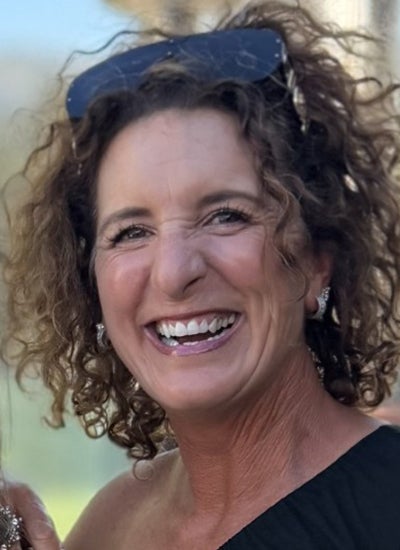
Celeste Settrini is a fourth-generation cattle rancher and partner in Settrini Ranch, a Red Angus cow-calf operation in California’s Salinas Valley. She is an advocate for California agriculture, elevating producers’ voices and strengthening public understanding of the beef industry. As rising costs, tightening margins and new regulations put pressure on ranchers, Settrini remains focused on opportunities to strengthen the industry and sustain its family-ranch foundation. Cal Poly’s Learn by Doing model taught her that leadership depends on responsibility, trust, communication and bringing people together around a shared goal.
“Every day gives you two choices: problems or possibilities. I tend to focus on the possibilities, though roadblocks remain. Rising operating costs strain every rancher’s bottom line. Water and food-safety regulations add burdens, while high replacement-heifer prices and tighter packer margins make growth difficult. But there is good news, too. Quality genetics are bringing premium prices, value-added programs reward producers who do things right and cattle continue to improve. I love this industry so much that I cannot imagine being involved in anything else. Families are the foundation of the beef industry, and we need to protect them.
“At Cal Poly, enterprise projects and classes showed me that leadership is not about coming from the biggest ranch or selling the most cattle. It is about bringing people together for a common goal. I saw a quote once and I stand by it today amid all the leadership roles I have served in since Cal Poly. ‘If I have seen further it is by standing on the shoulders of giants.’ We achieve more because we build on the knowledge, work and sacrifice of those who came before us. The Learn by Doing philosophy was just that — industry leaders who believed in me while at Cal Poly and helped create the woman I am today within the beef industry.”
Tiffin (Whitfield) Groff
(Agricultural Business, ’93)
CONSUMER PACKAGED GOODS
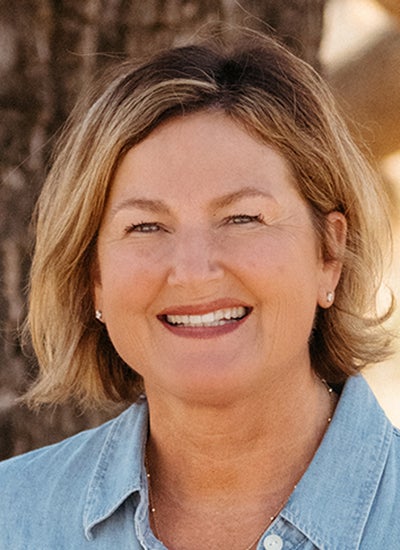
As chief commercial officer for Clover Sonoma, Tiffin Groff is helping a 110-year-old dairy brand remain relevant as dietary needs evolve. Her work focuses on developing nutrient-dense dairy products with clean labels and exceptional taste while supporting high standards of animal care and environmental stewardship among the company’s farm partners.
Groff credits Cal Poly with teaching her to get close to the work, ask questions, test ideas and take responsibility for the outcome. “I’m focused on developing more nutrient-dense dairy products that deliver exceptional taste and clean labels, backed by the highest standards of animal and environmental care.
“Learn by Doing taught me to dig in, ask questions, seek advice, test ideas and take responsibility for the outcome. It also taught me that the best outcomes happen with a great team — surrounding myself with solid people who bring different strengths and work together toward a greater purpose.
“You rarely have perfect information, so I trust my gut while seeking perspectives that sharpen my thinking. Learn by Doing taught me to take action before every answer is clear. Moving forward and adjusting as you learn can get you there faster than waiting for the perfect plan.”
Nina Bowdoin
(Food Science, ’24)
FOOD AND BEVERAGE MANUFACTURING AND PRODUCT DEVELOPMENT
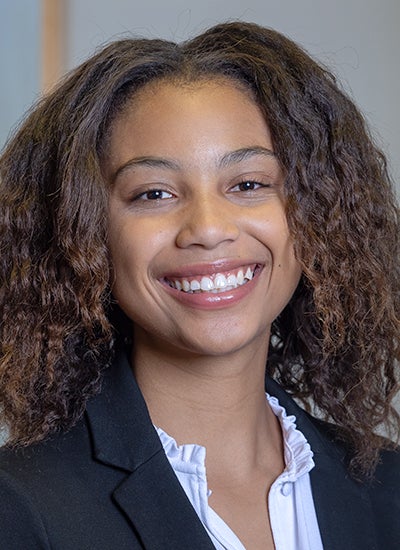
Nina Bowdoin is a product developer on the research and development team at Legendary Foods, a protein snack company. She applies the problem-solving and collaborative skills she gained at Cal Poly to develop high-protein, low-carb and low-calorie snacks.
“Working on the research and development team at protein snack company Legendary Foods, I often discover potential solutions and opportunities from observation and asking questions, then taking action to implement them. I strive to bring this curious mindset to work every day as I help develop better-for-you products that make eating healthier more enjoyable and accessible. This means making satisfying treats that both meet nutritional goals and can be scaled up for commercial production. It’s not uncommon that I create a perfected benchtop prototype, then find that the formula does not translate well to scaled-up processing conditions. Problem-solving in this case requires a lot of creativity and agility, as there is rarely one straightforward solution.
“Cal Poly’s Learn by Doing philosophy taught me that leadership means staying curious and compassionate. As the former co-president of the Cal Poly Food Science Club, I learned how to ask important questions to address unmet needs and develop initiatives.”
Amy Azzi
(Recreation Administration, ’05)
EXPERIENTIAL MARKETING AND BRAND SPONSORSHIPS
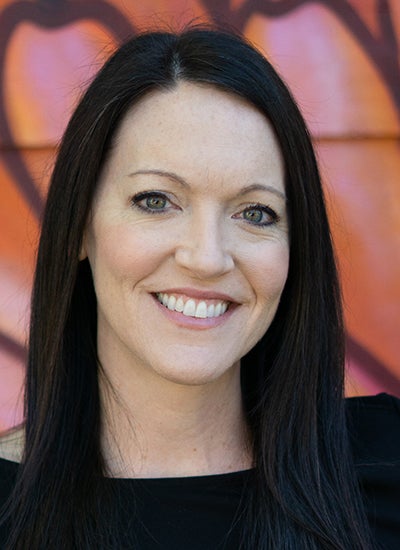
Amy Azzi, vice president of sponsorships and events, leads T-Mobile’s sports, entertainment, hospitality and events sponsorship portfolio, overseeing strategy, negotiation and activation for major partnerships. With 18 years of experience in sponsorship marketing, she has helped create sponsorship campaigns for global brands, including T-Mobile and Visa, across major professional and international sports platforms. Her work now includes some of the largest sports and entertainment investments in T-Mobile’s history, helping the company use sponsorships to demonstrate its network capabilities and business solutions.
“Learn by Doing taught me that you can’t be paralyzed by change. Transformation isn’t one giant step; it’s a lot of little ones that you take by owning the things you can control and letting go of the ones you cannot. Focusing on the things we can control is something I tell my team often when things around us in a larger organization are changing and we need to be able to plan for major moments for the brand that are out in front of us. Iterating and evolving along the way is what has allowed our team to grow the impact that sponsorships have had on our brand and new areas of the business.”
Visit Cultivate Fall 2026 to read more stories.


