
A New Home for Animal Health

The Charles and Claire Jacobson Animal Health Center expands hands-on clinical learning while preparing Cal Poly students to meet the evolving needs of animal care.
From rescuing stranded seals and sea lions to helping veterinarians insert gastric feeding tubes to stabilize the animals’ health, to monitoring pigs during surgery and studying the digestive health of beef cattle, fourth-year animal science major Austin Tinsley has gained a broad range of hands-on experience at Cal Poly. Through these Learn by Doing opportunities, he’s applied classroom knowledge in real-world animal care, veterinary procedures and livestock research.
Tinsley’s hands-on experience will grow even more this year with the opening of the Charles and Claire Jacobson Animal Health Center. Offering students immersive clinical experiences while delivering high-quality care for the university’s companion animals and livestock, the center gives students the opportunity to work with advanced-level instrumentation and equipment in multiuse spaces that are flexible for teaching, research, and clinical training — including wet labs, a surgery suite that can accommodate small animals or horses, a hospital for horses and other large-animal species, a pharmacy and a necropsy area. It replaces an aging campus vet clinic that dates to the 1960s.
“I'm excited for the large animal surgery opportunities that the Jacobson Animal Health Center will make possible,” Tinsley said. “Not only are there larger operating tables and physically more space than our old vet clinic, but there is even a way to hoist up large animals so that they can be placed on top of those tables and indoor recovery stalls for post-operative care. There is also an amazing outdoor necropsy space that will enhance our ability to perform dissections on a variety of animals like horses, pigs and even wildlife.”
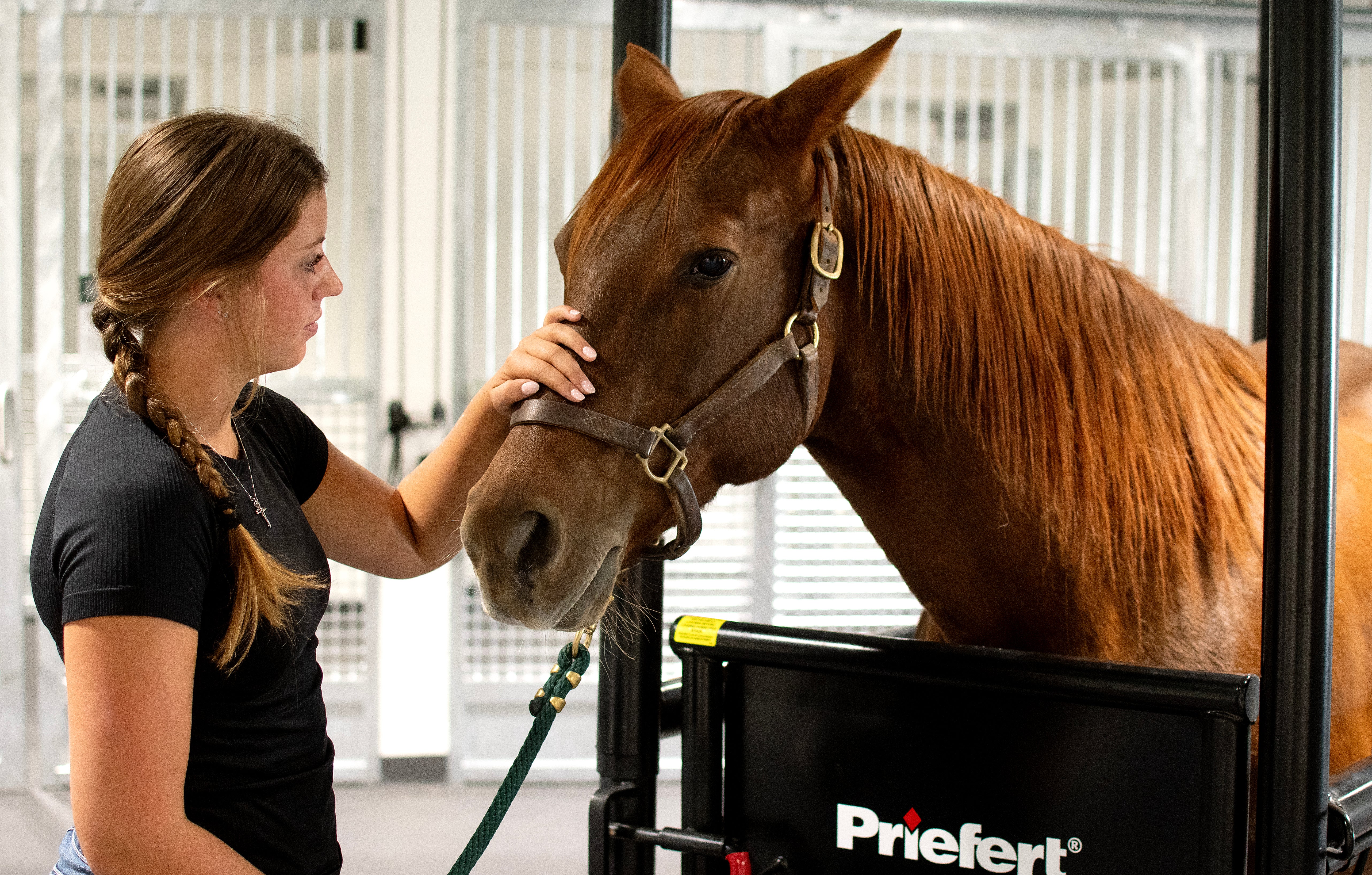
Tinsley, from Chino Hills, California, aspires to be a veterinarian focused on the interconnection between human, animal and environmental health. “I want to focus on zoonotic diseases, wildlife health, antibiotic resistance and other One Health issues,” Tinsley said. “I love working with all types of animals, so I am leaning towards becoming a mixed animal vet so that I can best tackle the types of widespread issues that I want to help resolve.”
Building the Veterinary Pipeline
While the Jacobson Animal Health Center serves students with a wide range of animal health and agriculture interests, it also creates a direct pathway for future veterinarians to gain the large-animal experience and confidence needed to help meet a growing workforce shortage. Large-animal veterinarians are increasingly scarce, particularly in rural and agricultural communities where producers depend on them to care for cattle, horses, sheep, swine and other livestock. The shortage has been growing for more than a decade, with an aging workforce, fewer veterinary graduates choosing food-animal practice and the demands of operating a rural practice making it harder for communities to recruit and retain veterinarians — all creating a need for more students to gain early exposure to large-animal medicine and see it as a viable career path.
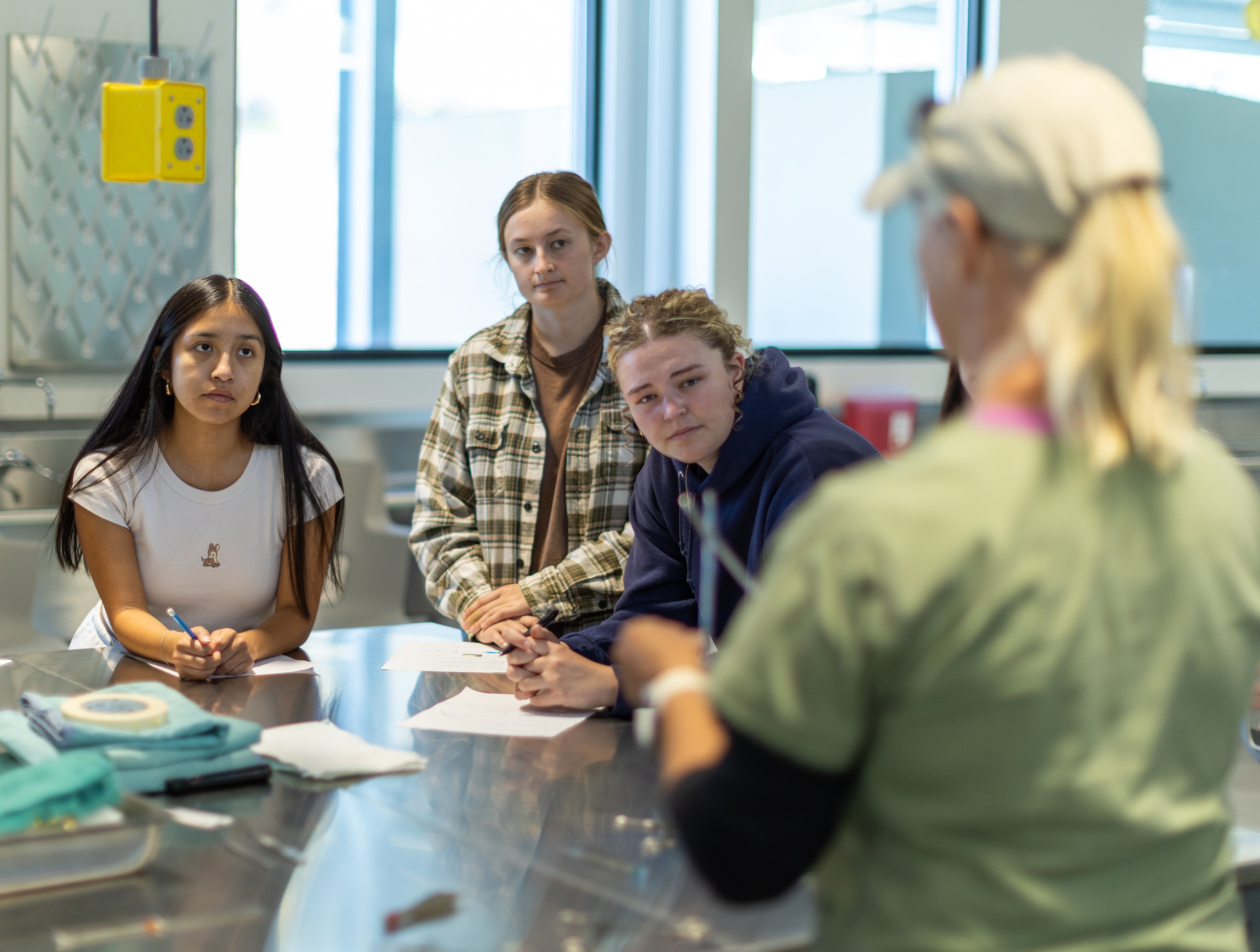
The center’s hands-on experiences align with the USDA’s Rural Veterinary Action Plan released in 2025, which calls for stronger pathways into rural food-animal practice. By giving students early exposure to livestock care, clinical procedures and agricultural research, the center’s aim is to help build the next generation of veterinarians needed to support animal health and food safety.
“The new center expands the quality of teaching we can provide,” Kim Sprayberry, associate department head and faculty veterinarian said. “With more space, modern equipment and room for students to gather, observe and practice new techniques, we can bring them into the clinical learning experience in a much more meaningful way.”
The center’s value lies in its immediate impact on student learning and its ability to prepare students for the varied paths they will pursue after graduation.
“We will always emphasize and support students interested in pursuing large-animal medicine and veterinary school, while also supporting the many students who pursue small-animal practice. Flexible spaces for equine surgery and large-animal anesthesia, along with well-equipped areas for small-animal exams and minor procedures, allow us to give students experience across the full spectrum of veterinary care,” Sprayberry said.
Discovering Career Paths Through Experience
Tinsley’s passion for veterinary medicine began when he volunteered at an animal shelter and vet clinic during high school. “There, I got to see the intense, yet rewarding, nature of veterinary medicine,” he said. “It showed me that each patient comes with their own unique struggles and challenges, and that relying on your team and precise problem-solving is the only way to thrive in the industry.” He chose Cal Poly because he wanted an education that focused on practical, hands-on animal science experience.
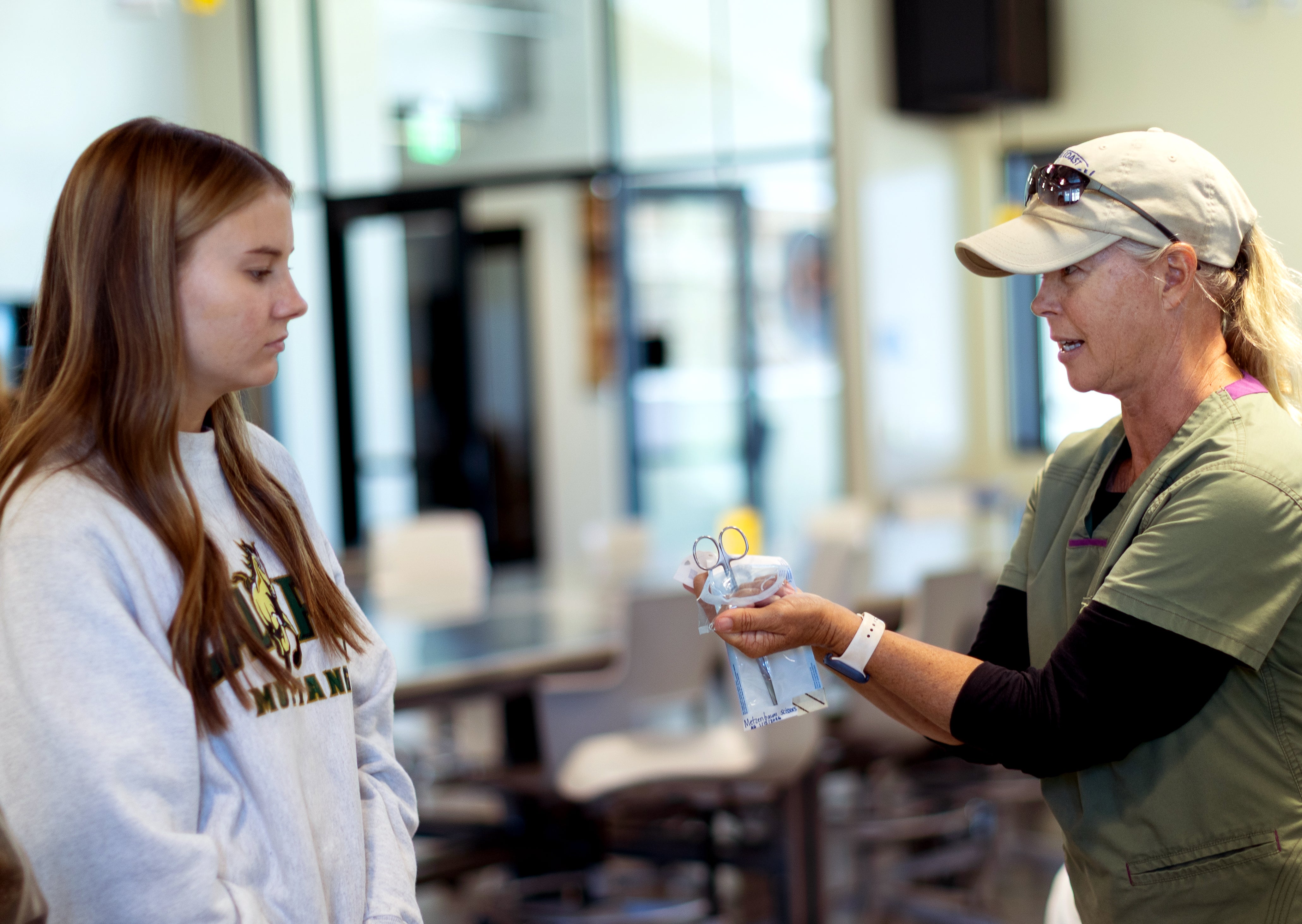
In a recent Veterinary Clinic Operations Enterprise, Tinsley and fellow students learned how to assemble surgical packs and use sterilization equipment. “Every clinic you work in will be different but you will have a general understanding of how they work,” Lecturer Julie Yuhas told the students about the course learning objectives. Yuhas, a registered veterinary technician, explained how various surgical instruments — including suture scissors, forceps and scalpels — might be used, passing them around so students could handle and study them.
Third-year animal science major Rory Chamberlin, also on the pre-veterinary track, gained some direct experience volunteering with Pets in Need, a nonprofit no-kill animal shelter headquartered in Redwood City, California, during the summer. “I am looking forward to observing more large-animal procedures, particularly equine, since my previous clinical experience has centered around small animals,” she said.
“Cal Poly’s hands-on learning model has helped me to build confidence by improving technical skills in opportunities typically only offered outside the classroom,” Chamberlin said. “In a clinical setting, I feel much more comfortable with common techniques like practicing restraint, administering medication or performing wellness exams since I have practiced them under the expertise of our Animal Science faculty.”
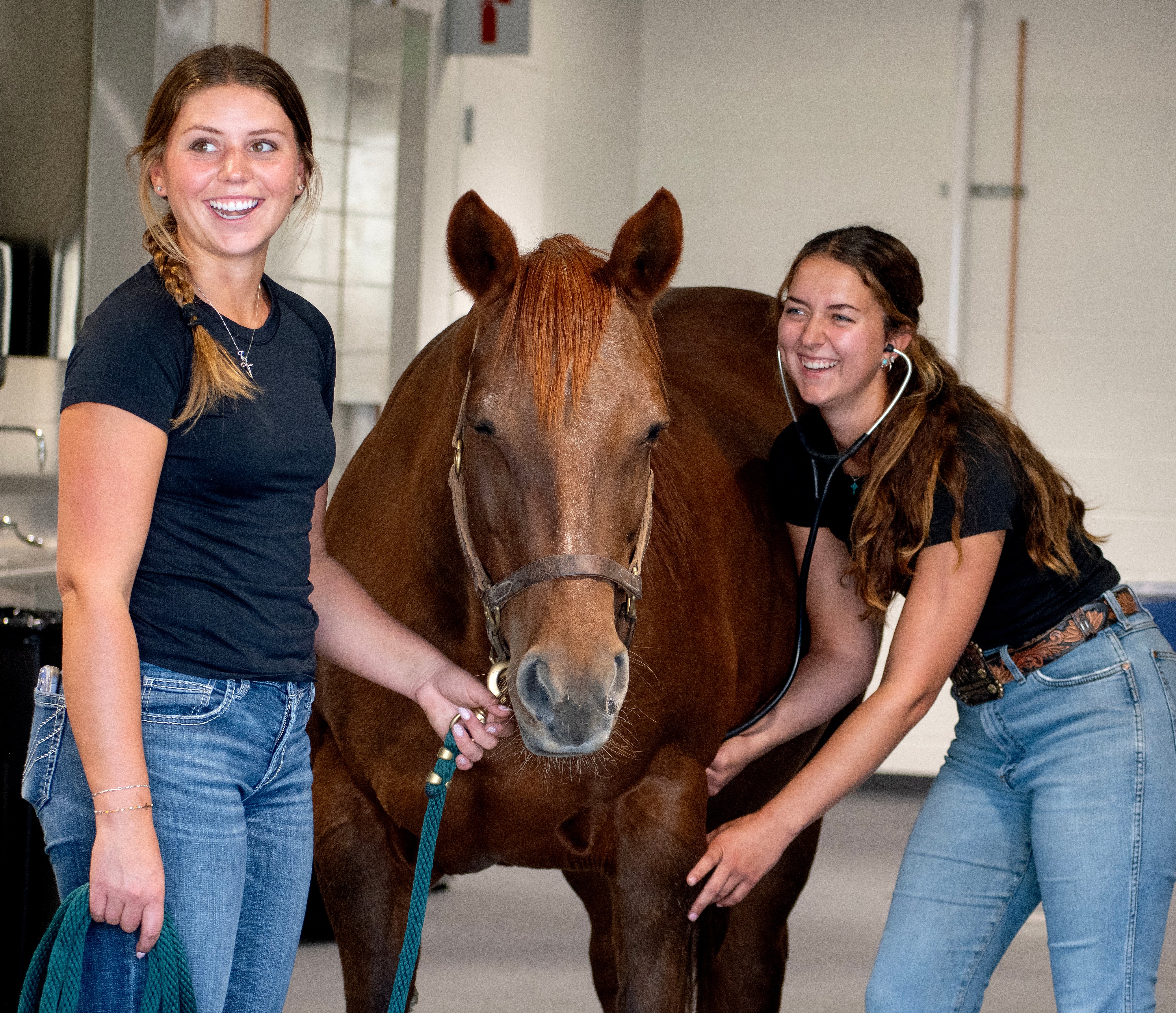
Students also help care for the college’s livestock, a population that can reach 2,000 animals at a given time and includes horses, cattle, pigs, sheep and goats. Anneliese Sullivan, a second-year animal science major, said working in various enterprise classes has exposed her to a wide range of hands-on experiences with both small and large animals. “Cal Poly has given me so many opportunities, from lambing to calving,” she said. “I’m learning what I enjoy doing.”
As students discover where their interests and career goals may lead, the new center expands the opportunities available to them – strengthening care for the college’s livestock while creating more space for every student to gain a wide range of hands-on learning experiences.
“The overarching benefit of the Jacobson Animal Health Center is more space and state-of-the-art facilities that allow us to provide better medicine for Cal Poly’s animals while expanding hands-on learning for our students that will benefit students across animal science – not only those on a pre-veterinary path,” Sprayberry said.
For students like Tinsley, those opportunities build the confidence for what comes next.
“Cal Poly’s hands-on learning is preparing me for what comes next because being a veterinarian requires a plethora of knowledge and skills that are best learned by doing them yourself,” he said. “Having learned and actually done things like small and large animal restraint, diagnostic skills like fecal floats, ultrasounds, and blood smears, artificial insemination, oocyte extraction and more all as an undergraduate student puts me in an amazing spot for veterinary school, where many people have never done those things before. These skills will allow me to springboard towards success as a veterinarian.”
Visit Cultivate Fall 2026 to read more stories.


