
Q&A with Steve Barnard

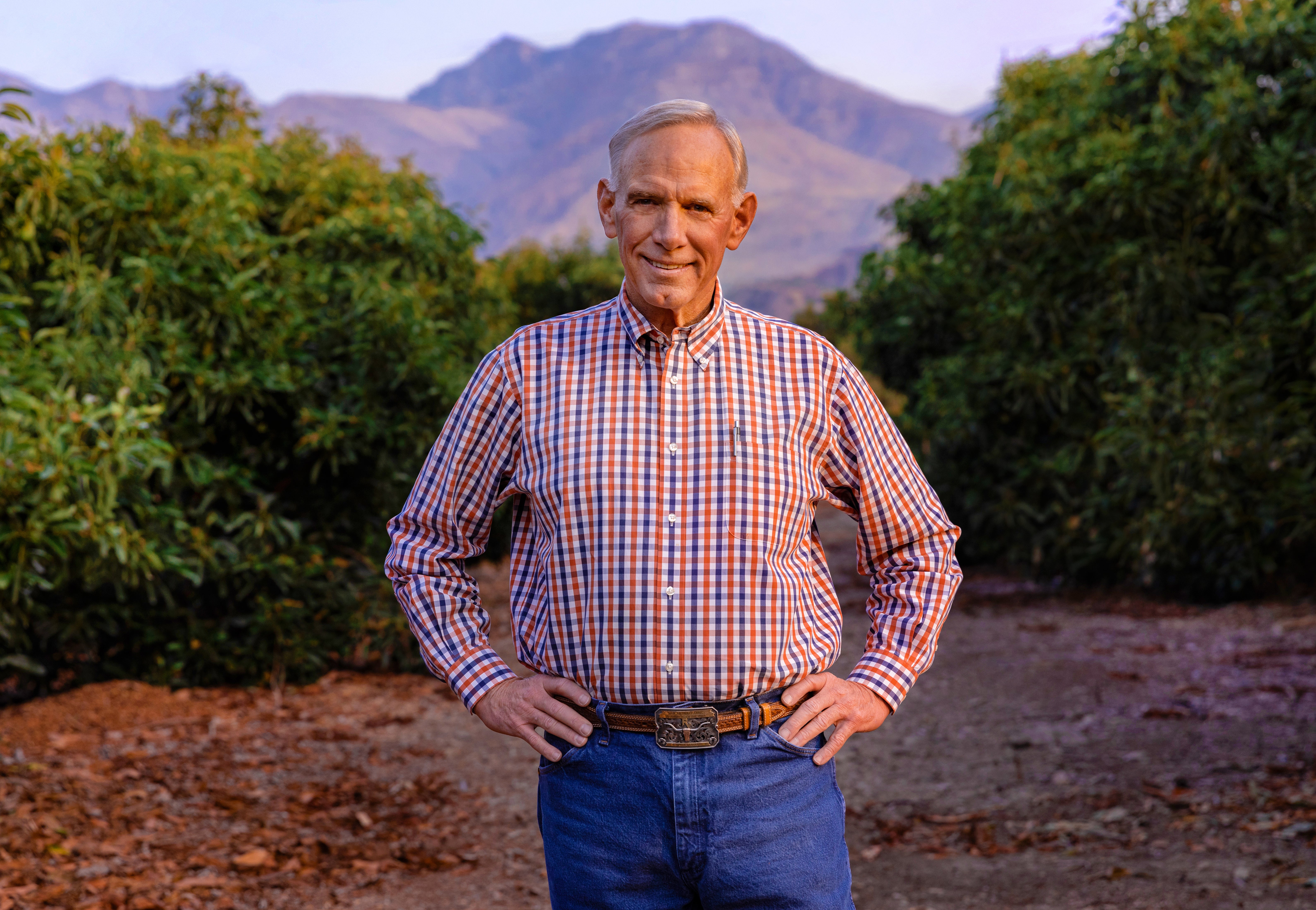
Steve Barnard’s (Agricultural Business, ’75) path to building Mission Produce began with humble roots in Ventura County’s produce industry, where he learned the business from the ground up. He was drawn to the fast pace and ever-changing demands of the industry, but it was his instinct for opportunity and the willingness to take calculated risks that ultimately led to his success. Barnard, who co-founded Mission Produce in 1983 in Oxnard, California, helped grow a small avocado operation into a global business and ultimately changed the trajectory of the industry. He credits observing consumers, anticipating their needs and seizing the opportunities to meet those demands. Now Mission’s executive chairman reflects on the industry’s evolution, the lessons of building a business around a perishable crop and the next generation of agriculture and produce leaders.
What did the avocado industry look like when you founded Mission Produce in 1983?
At the time, the U.S. consumption was two pounds per capita, and the California avocado industry was growing more than we could eat. Back then, we sold the fruit hard and ripening at home would take over a week. We changed that, and by developing the ripe program, we created the future of the industry.
What key innovation helped transform the industry?
At the time we had an intern from British Columbia who wanted to do a trial on the ethylene effects on avocados. I knew from observing people that they preferred fruit that was ready to eat. The ethylene gas ripened the avocados and allowed us to spearhead a new approach — offering consumers ripe avocados that were ready to eat upon purchase. In the late 1980s I convinced a local retailer in Oxnard to give it a try. We put the display up on a Friday morning and by noon on Saturday, all the avocados were gone. I guess we were on to something. Later that year, the retailer agreed to a year-long ripe program, and in 2000 we launched our first ripening center in Oxnard. We’ve been selling our ripe programs ever since.
How did that early success with ripe avocados shape Mission Produce’s growth strategy and expansion into new markets?
We created a new path to the consumer with ripe and ready avocados. We went from having more fruit than we could sell to not having nearly enough and could no longer rely on California’s seasonal production alone. We built distribution centers to own the entire process. We raised some more capital, then went national and created more demand. Avocado consumption tripled. We started sourcing more fruit out of Chile, then Mexico, Peru, then Colombia to ensure that we had a reliable year-round supply. Pretty soon we were everywhere.
What does "reliable supply" mean to a retailer today that it did not mean 20 years ago?
Produce has to follow the sun. For us, that meant we needed to be in Mexico and other countries and have access to provide year-round product to retailers. You have to have options and you better anticipate that something is going to happen somewhere. We grow in Peru because California is limited on what it can grow in the same window. It still gets good prices and helps build consumption long term for everyone.
You’ve served in leadership roles with the Produce Marketing Association and Western Growers. What issues have most changed the industry?
Open borders and globalization in produce. Those two things transformed our business from being localized to California to growing into a global, billion-dollar company. You have to anticipate what is going to happen and have options — because something is always going to happen. You can only prepare so much.
What makes Cal Poly important to California agriculture’s future?
Cal Poly is important because California agriculture needs graduates who can move easily between the field, the packing house, the supply chain and the marketplace. Its Learn by Doing approach gives students the practical experience and the self-confidence to face and address challenges. Graduates from Cal Poly are always reading the room. And Mission Produce is where it is today because we read the customer and gave them what they wanted. Watching human behavior matters. There are, of course, a lot of great graduates from all over, but Cal Poly graduates are always looking forward. We have a recruiter on campus for career fairs and try to get students into our internship program while they are in the middle of their studies to expose them to the various facets of the company – everything from the fields and packing facilities to working in sales, logistics, operations, and global transportation and sourcing.
Looking back on more than four decades in the produce industry, what accomplishments or moments have been most rewarding to you personally — and why?
We didn’t predict the future, we created it. Developing and tripling avocado consumption and taking a chance on it. And the relationships formed along the way. You can never know too many people. I’ve been on all the boards and I’m back on the International Fresh Produce board. It’s about the relationships you form throughout your career. The late Jack Simplot, the entrepreneur who revolutionized frozen french fries for McDonald's, was a great mentor of mine. We met on a horseback ride in the Santa Ynez Valley. He reminded me that everything is one step at a time and to never quit. He was down to earth, simple, thought big and worked hard. I listened and now Mission Produce is a billion-dollar company and I’m still wearing the same Wranglers to the office.
What advice do you have for the next generation?
It is a totally different world today with technology. When I was at Cal Poly, all we had was a little calculator. That is how far we have come. You can’t survive in agriculture if you have an ego. Something will always go wrong. You have to be level-headed, high energy, but not too much, and stay the course. Play the game with your head up. Get to know as many people as you can, even if you’re not friends, to figure out where they’re coming from. I just hope we don’t get away from the personal level of it. The produce world is personal. We are providing a superfood and we’re good at it because we listen to the consumers. It’s important to never stop listening.
Visit Cultivate Fall 2026 to read more stories.


